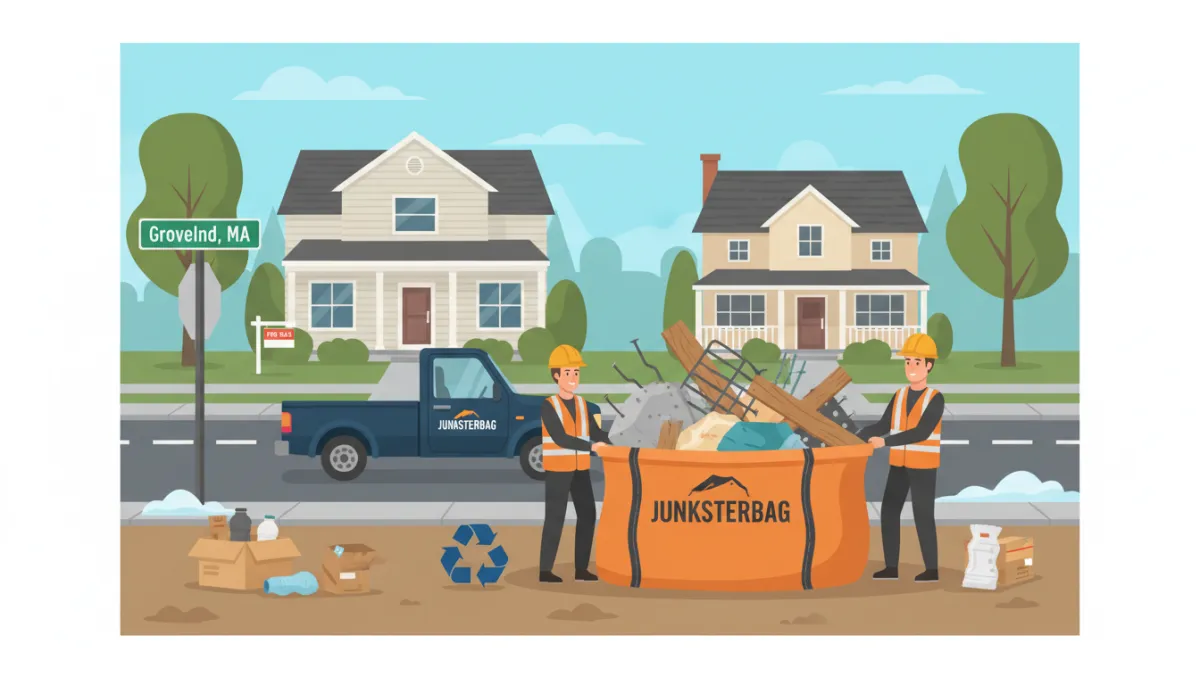
Efficient Debris Removal: Dumpster Bags in Groveland
Junk Removal, Construction Debris, Dumpster Bags
Construction Debris Removal in Groveland, MA: How to Load a Dumpster Bag the Right Way
If you are planning construction debris removal in Groveland, MA, a properly loaded dumpster bag can save you time, money, and headaches with local regulations, tight driveways, and New England weather.
A well-loaded dumpster bag keeps Groveland projects on schedule, compliant, and affordable.
Quick answer: For safe, legal construction debris removal in Groveland, MA, place your dumpster bag on a flat, accessible surface, respect weight limits, load heavy materials in first, keep sharp edges away from the sides, sort recyclables for MassDEP compliance, and schedule a local pickup service like Junkster Bag’s Groveland dumpster bag pickup once the bag is level-filled and accessible from the street.
Why Dumpster Bags Work So Well in Groveland, MA
Groveland’s narrow side streets, older driveways, and mix of single-family homes and multi-family properties can make a full-size roll-off dumpster overkill—or simply impossible to place. Dumpster bags are ideal for kitchen remodels, bath upgrades, roof patching, and small additions where you still generate serious debris but need a compact, flexible solution.
Services like Junkster Bag’s dumpster bag pickup in Groveland are built specifically for these situations, including pickups of Junkster bags, WM Bagster bags, and big-box store dumpster bags from Home Depot or Lowe’s.
Know the Rules: Groveland & Massachusetts Debris Regulations
Before you toss a single 2×4 into your bag, it is important to understand what Groveland and the state expect from contractors and DIYers when it comes to construction debris removal.
No burning or burying. The Groveland Fire Department prohibits burning or burying construction materials on-site, and violations can mean fines. (Groveland Fire bylaw)
All debris must be removed. Under the town’s subdivision regulations, cut trees, rocks, soil, and construction waste cannot be left or buried on lots or streets at occupancy. (Groveland Subdivision §70‑4.3)
Sort according to MassDEP waste bans. Massachusetts bans many construction and demolition materials—like asphalt, brick, concrete, clean gypsum, metals, and certain wood—from disposal in landfills or incinerators. (MassDEP Waste Bans)
In practice, that means your dumpster bag is only one part of the solution. You still need to keep banned materials separate for recycling and make sure everything leaves the property—no burying debris at the back of a lot or pushing broken concrete into a low spot.
💡 Pro tip: Keep a simple “recycling corner” on-site for concrete, brick, metal, and clean drywall so your hauler can divert those materials to C&D processing facilities, reducing landfill use and potential surcharges. (WM dumpster bag guide)
Step 1: Choose the Right Spot for Your Dumpster Bag in Groveland
Bag placement is the number one reason pickups get delayed or incur extra handling charges. In Groveland, you also have to work around snowbanks in winter, tight driveways, and shared parking in multi-family buildings.
Use a flat, stable surface. A paved driveway, solid gravel pad, or compacted area works best. Avoid soft lawns that turn to mud in March or after heavy rain.
Think access for the truck. Your pickup provider needs to reach the bag with a boom or lift. Leave a clear path from the street with enough overhead clearance for tree limbs and wires. Narrow side streets off Main Street or School Street can be especially tight, so give extra room.
Plan around winter snowbanks. In Groveland’s snow season, avoid placing the bag where plows pile snow or where the bag will be frozen into an ice berm. Aim for a spot that can be shoveled out before pickup.
Check HOA or condo rules. Some townhouse and condo associations off Route 97 or in denser neighborhoods limit how long debris can sit outside or where you can place a bag. Get written approval if needed to avoid fines.

Correct placement on a flat, accessible driveway helps ensure hassle-free pickup in Groveland.
Step 2: Understand Weight Limits and What Can Go in the Bag
Every dumpster bag—Junkster, WM Bagster, or big-box brand—has a listed weight limit. Exceed that and you risk tears, safety issues, or refusal at pickup. (How to use a dumpster bag) Read the tag or packaging before you start.
In general, these construction-friendly materials are fine in most bags and work well for construction debris removal in Groveland, MA:
Wood, trim, studs, and sheathing offcuts
Drywall scraps (non-asbestos, non-contaminated)
Roofing shingles (watch weight), underlayment, and flashing
Flooring offcuts, tile, and subfloor pieces
Small fixtures like cabinets, doors, and trim bundles cut to length
Not allowed: hazardous materials such as paints, solvents, asbestos, fuels, and many chemicals. For hazardous items, check with MassDEP (MassDEP) or specialized services like BiohazardPro (BiohazardPro).
Step 3: Load Your Dumpster Bag the Right Way (Contractor-Smart Method)
Build a Solid, Heavy Base
Start with dense materials on the bottom so the bag stays stable when lifted:
Place broken concrete, brick, and tile flat on the bottom, spreading weight evenly.
Keep heavy loads within the manufacturer’s recommended volume to avoid exceeding weight limits. (Dumpster bag safety tips)
Protect the Bag from Sharp Edges
Dumpster bags are tough, but not indestructible. To prevent tears during lifting:
Place sharp items—cut metal, broken tile, jagged wood—in the center of the bag, not along the sides.
Wrap especially sharp pieces in cardboard or leftover underlayment before tossing them in.
Stack Smart and Keep the Load Even
Once the base is in, work your way up with lighter materials:
Alternate layers of wood, drywall, and lighter debris to fill gaps and keep the surface level.
Cut long pieces to fit inside the bag footprint—overhanging boards can cause problems during pickup.
Avoid mounding; keep debris level with or slightly below the top edges so straps can be accessed and the bag can close.
Safety reminder: Wear gloves, eye protection, and sturdy footwear when loading. Even small remodels in Groveland basements or second-floor walk-ups can produce sharp offcuts and heavy chunks that cause injury if handled casually. (Safety tips)
Step 4: Local Realities in Groveland — Stairs, Multi-Family, and Parking
Many Groveland projects are in older homes with narrow stairwells or multi-family buildings where you share driveways and parking. Plan your debris flow before you start swinging the sledgehammer.
Basement and attic projects: Stage debris near the top or bottom of stairs, then batch-carry to the bag. Overloading a stairway with loose debris is a tripping hazard, especially in winter when boots are wet and muddy.
Multi-family and tight lots: Coordinate with neighbors about temporary parking changes so a pickup truck can reach your bag. In some Groveland three-deckers, you may need to place the bag at the front curb and carry debris out in smaller loads.
Sidewalk and street use: If you must place a bag partly on the street or sidewalk, check with the town and your contractor about permits or temporary no-parking signs. Groveland follows state guidance on keeping public ways clear for emergency access. (Construction site cleanliness)
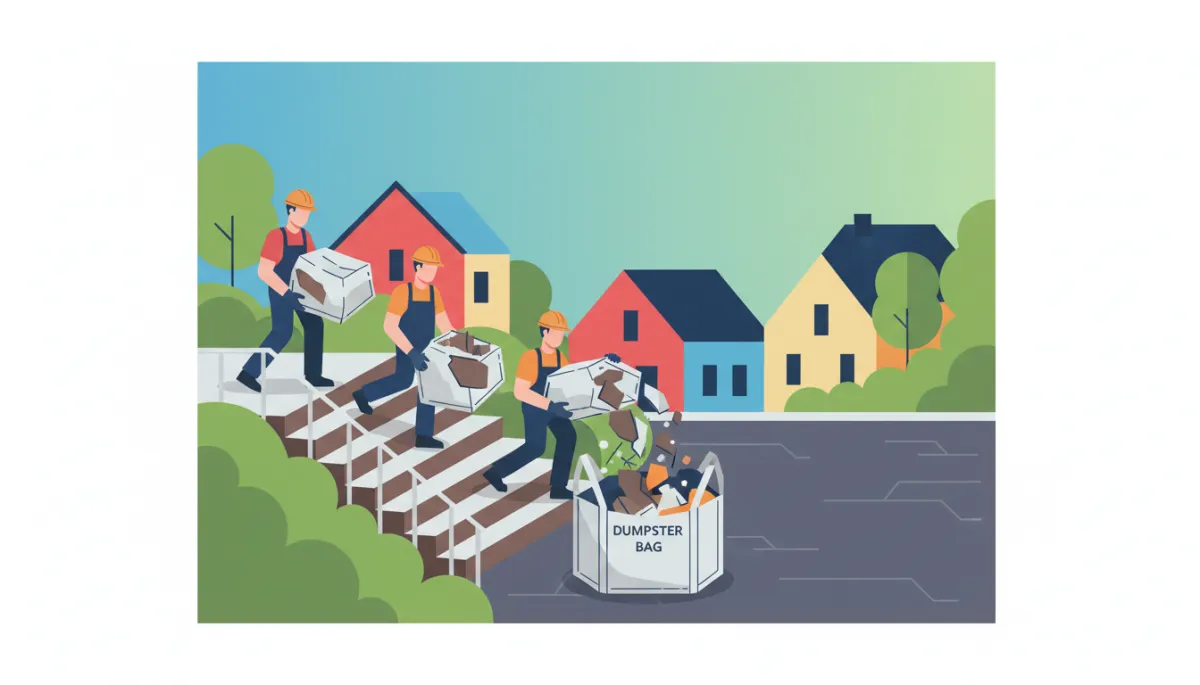
Planning the route from work area to bag reduces trips, risks, and project downtime.
Step 5: Maximize Recycling and Reuse to Stay Compliant and Green
Massachusetts is serious about keeping construction and demolition debris out of landfills. Sorting materials not only complies with MassDEP waste bans but often saves money at the transfer station. (MA waste management guide)
Recycle metals: Keep copper, steel, and aluminum aside; they are highly recyclable and sometimes have scrap value.
Concrete, brick, and asphalt: These can often be crushed and reused as aggregate. Ask your hauler or check regional C&D facilities listed through MassDEP.
Donate usable items: Cabinets, doors, and fixtures in good condition may be accepted by organizations like Habitat for Humanity ReStore or Goodwill, reducing what goes into your bag. (Habitat ReStore donations)
Step 6: Schedule Professional Dumpster Bag Pickup in Groveland, MA
Once your bag is level-filled, straps accessible, and the area is clear, it is time to schedule pickup. For local, construction-savvy service, Junkster Bag offers:
Junkster Junior Bag pickup starting at $199
Green Bag pickup at $279 and Heavy Bag pickup at $289 for denser loads (Groveland dumpster bag pricing)
Junkster Bag also picks up WM Bagster and other store-bought bags, giving you flexibility if you already purchased a bag from a retailer like Home Depot or Lowe’s. (WM Bagster) For larger projects outside bag capacity, consider pairing bags with a traditional dumpster from local providers listed on Junkster’s site, such as their dumpster bag vs. dumpster comparison.
Common Mistakes Groveland Homeowners Make with Dumpster Bags
Placing the bag on a soft lawn that turns to mud and sinks after a few rainy days.
Overloading with roofing shingles or concrete until the bag exceeds safe lifting weight.
Blocking access with parked vehicles, especially on narrow streets where the truck has only one approach angle.
Mixing hazardous waste or banned materials in with regular construction debris, causing delays and extra fees.
Contractor note: If you are a builder working multiple sites around Groveland and the Merrimack Valley, standardize your crew’s loading process. A quick toolbox talk on bag limits, sorting, and placement pays off in fewer callbacks and smoother inspections.
FAQ: Construction Debris Removal in Groveland, MA with Dumpster Bags
1. Do I need a permit to use a dumpster bag in Groveland, MA?
For most residential projects where the bag sits fully on your private property (driveway or yard), a permit is typically not required. If the bag will occupy any part of a public way or sidewalk, check with the Groveland Building Department or DPW for guidance. When in doubt, ask your contractor or call the town offices before placing the bag.
2. What size dumpster bag should I use for a small kitchen remodel?
A standard dumpster bag is usually enough for a modest Groveland kitchen project that involves cabinets, countertops, some drywall, and flooring—assuming you are not including large amounts of concrete or masonry. For heavier projects, consider Junkster’s Heavy Bag pickup tier and review their guidance on how Junkster Bag works to match your bag and load to the right service level.
3. Can I mix household junk with construction debris in the same bag?
In many cases, yes—non-hazardous household items like broken furniture or old rugs can go in with construction debris, as long as you stay within weight and material rules. However, mixing everything together may reduce recycling efficiency. If you have a lot of general junk, consider a dedicated junk haul or an additional bag; Junkster’s blog on junk removal bag vs. junk hauling can help you choose the best approach.
4. How long can I keep a dumpster bag on my property in Groveland?
From the town’s perspective, the key issues are safety, cleanliness, and not creating a nuisance. Groveland’s subdivision rules require sites to be cleared of waste by occupancy, and neighbors or HOAs may have their own expectations. As a best practice, aim to fill and schedule pickup within a week or two. Long-term, overflowing bags can lead to complaints or attract pests, especially in warmer months.
5. What should I do with materials not allowed in dumpster bags?
First, confirm the prohibited list with your bag manufacturer and pickup provider. Paints, solvents, asbestos, and certain chemicals usually require special handling. Check MassDEP’s guidance on household hazardous waste and regional collection events, or contact specialized services like BiohazardPro for complex situations. If your renovation includes energy upgrades, programs like Mass Save can sometimes advise on safe removal of older equipment and materials.
6. How do I handle construction debris in winter with snow and ice?
In Groveland winters, keep the path to your bag shoveled and sanded, and avoid placing the bag where plows push snow. Do not let the bag get buried by snowbanks—it can freeze in place and delay pickup. Communicate with your pickup service about timing around storms, and consider staging debris indoors until a clear weather window, then loading the bag in one push and scheduling pickup right away.
7. Is a dumpster bag or a traditional dumpster better for my Groveland project?
For small to medium projects—bath remodels, partial kitchen updates, shed demos—a dumpster bag is usually more cost-effective and easier to fit on tight Groveland lots. For full-house gut renovations or large additions, a roll-off dumpster may be the better fit. Review Junkster’s dumpster bag vs. dumpster guide or talk with their team about your scope, access, and schedule.
8. How fast can I get my dumpster bag picked up in Groveland, MA?
Pickup timing depends on season and demand, but many local services, including Junkster Bag, offer prompt scheduling once your bag is ready. The key is to have the bag accessible, level-filled, and free of prohibited materials. Booking ahead during busy spring and fall renovation seasons helps you lock in the pickup window you want.
Make Construction Debris Removal in Groveland, MA Simple and Compliant
When you understand local rules, respect weight limits, and load your dumpster bag strategically, construction debris removal in Groveland, MA becomes straightforward. Place the bag on a solid, accessible surface, sort recyclables to satisfy MassDEP waste bans, keep sharp edges away from the sides, and schedule a reliable local pickup.
Whether you are a homeowner tackling your first remodel or a contractor running multiple jobs around town, partnering with a local specialist like Junkster Bag lets you focus on the build while they handle the debris. Load it right, keep it safe, and let the pros take it from there.