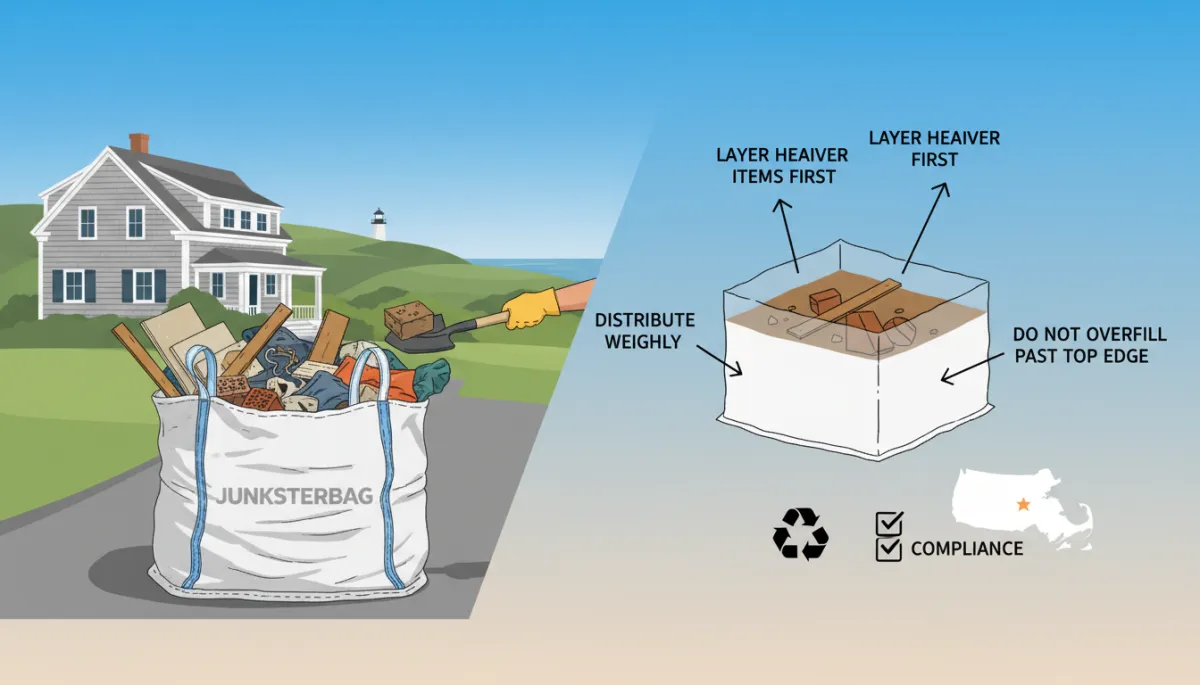
Efficient Dumpster Bag Loading in Manchester-by-the-Sea
Construction Debris Removal, Dumpster Bags, Manchester-by-the-Sea MA
Construction Debris Removal in Manchester-by-the-Sea, MA: How to Load a Dumpster Bag the Right Way
Managing construction debris removal in Manchester-by-the-Sea, MA can be challenging, especially with narrow coastal streets, strict local rules, and limited town collection options. A properly loaded dumpster bag is one of the most efficient ways to keep your job site safe, compliant, and on schedule.
Quick Answer: To load a dumpster bag the right way in Manchester-by-the-Sea, MA, place flat, heavy items like broken concrete and tiles on the bottom, stack lumber and drywall cut to size in layers, keep weight evenly distributed, and never exceed the fill line or weight limit. This helps ensure safe pickup, maximizes space, supports recycling under MassDEP waste bans, and keeps you compliant with town rules that limit curbside construction waste.
Why Construction Debris Removal in Manchester-by-the-Sea, MA Is Different
Manchester-by-the-Sea is a compact, historic seaside town. That charm comes with constraints that affect how you handle construction debris, whether you are renovating a cottage near Singing Beach or updating a multi-unit building closer to the village center. The town allows only a very small amount of construction waste in curbside orange bags, and none at the Transfer Station, which means most projects must rely on private services such as dumpster bags and professional pickup.
For convenient, compliant service, the dedicated location page for dumpster bag pickup in Manchester-by-the-Sea is the best starting point to understand how Junksterbag supports local homeowners and contractors.
Local Constraints to Plan Around: Streets, Parking, HOAs, and Weather
Before you even start loading your dumpster bag, it is essential to plan for Manchester-by-the-Sea’s unique site conditions. Proper planning avoids fines, delays, and safety issues on tight residential streets.
Narrow, hilly streets and limited parking: Many roads are tight and lined with parked cars, so choose a flat spot where a pickup truck can safely access the bag without blocking traffic or emergency vehicles.
Driveways and shared lots: In multi-family buildings or condos, confirm with neighbors and property managers where a dumpster bag can sit without obstructing garages or shared driveways.
HOA and condo rules: Many associations in Manchester-by-the-Sea have appearance, noise, and placement rules for dumpsters and bags. Get written approval on location, duration, and hours for loading.
Winter snowbanks and plowing: In snowy months, avoid placing your dumpster bag where snowplows pile snow or where melting runoff could wash debris toward drains and wetlands.
Stairs, slopes, and elevators: For hilltop homes or second-floor renovations, consider how far workers must carry debris. Using sturdy cans or dollies to shuttle materials to the bag reduces strain and speeds up loading.
📌 Key Takeaway: Choose a level, accessible spot for your dumpster bag that respects HOA rules, avoids snowplow paths, and allows a pickup truck to reach the bag without tight maneuvering.
Understanding Local Regulations and Why Proper Loading Matters
In Manchester-by-the-Sea, you cannot simply pile demolition waste at the curb and hope for the best. Town guidance notes that only a small amount of construction waste is allowed curbside in a single orange bag, and construction waste is not accepted at the Transfer Station. Larger projects must rely on private hauling and must respect state-level waste bans from the Massachusetts Department of Environmental Protection (MassDEP).
MassDEP’s waste disposal bans prohibit many common construction and demolition materials from going directly to landfill. Items such as asphalt, brick, concrete, metal, clean wood, and gypsum wallboard must be diverted for recycling or processing whenever possible. How you load your dumpster bag directly affects whether these materials can be sorted efficiently and handled at licensed C&D facilities.
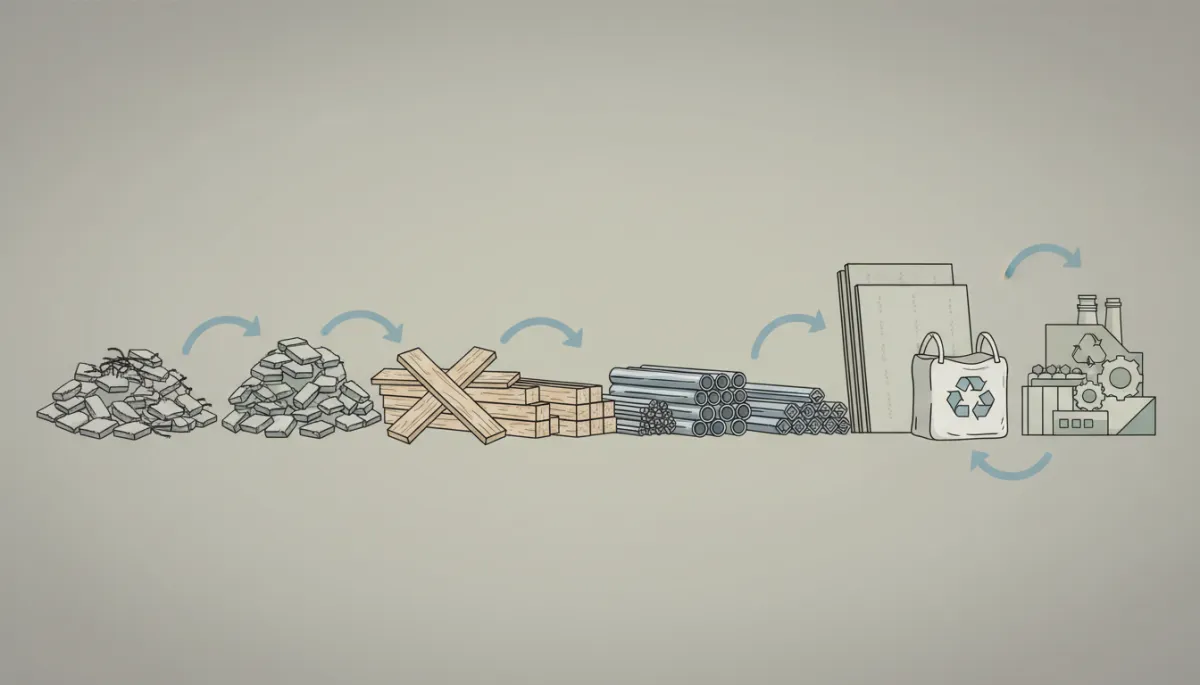
Sorting and stacking materials in your dumpster bag makes recycling and compliant disposal far more efficient.
A well-loaded bag supports:
Efficient debris removal: Even weight distribution and flat stacking make it easier and safer for crews to lift and haul the bag away in one visit.
Better recycling outcomes: Grouping similar materials—such as clean lumber or metal—helps downstream facilities recover more material instead of sending it to landfill.
Regulatory compliance: Proper loading helps ensure you do not exceed weight limits, mix banned materials incorrectly, or allow debris to blow or wash into storm drains, which could raise concerns under local stormwater rules.
Step-by-Step: How to Load a Dumpster Bag the Right Way
1. Set Up Your Dumpster Bag on a Solid, Level Surface
Place the bag on a flat area of your driveway or another paved surface whenever possible. Avoid lawns that may become soft after rain or snowmelt, and steer clear of steep slopes common on some Manchester-by-the-Sea lots. The bag should be within easy reach of the street so the pickup truck can lift it without driving over landscaping or septic systems.
2. Start with the Heaviest, Flattest Debris
Always load from the bottom up. Place dense, flat materials first:
Broken concrete, pavers, and bricks
Tile, stone, and masonry
Short sections of framing lumber or joists
Lay these items as flat as possible to create a stable base. Avoid tossing in large chunks randomly, which can create voids and concentrate weight in one corner, making the bag harder to lift safely.
3. Stack Lumber and Drywall in Crossed Layers
Cut long boards and drywall sheets so they fit fully inside the bag without protruding. Stack them in alternating directions—similar to building a log cabin—so they interlock and resist shifting. This technique maximizes space and keeps the load compact during transport around Manchester-by-the-Sea’s winding roads.
4. Fill Voids with Smaller Debris, But Avoid Overfilling
Use offcuts, small pieces of trim, and broken tile to fill gaps between larger items. This prevents shifting and helps you use the bag’s full capacity. However, never exceed the manufacturer’s fill line or weight rating. An overloaded dumpster bag may not be safe to lift and can lead to additional charges or a failed pickup.
💡 Pro Tip: Keep a simple running tally of heavy materials—such as concrete or roofing—so you do not unintentionally exceed weight limits, especially on multi-day projects.
5. Place Light, Crushable Items on Top and Secure Loose Debris
Reserve the top of the bag for lighter materials:
Insulation (bagged), plastic sheeting, and packaging
Small scraps of drywall or trim wood
Non-hazardous general renovation debris
Bag lightweight, dusty materials so they do not blow away, especially near the harbor where winds can be strong. This also helps prevent debris from entering storm drains, supporting the town’s stormwater management goals.
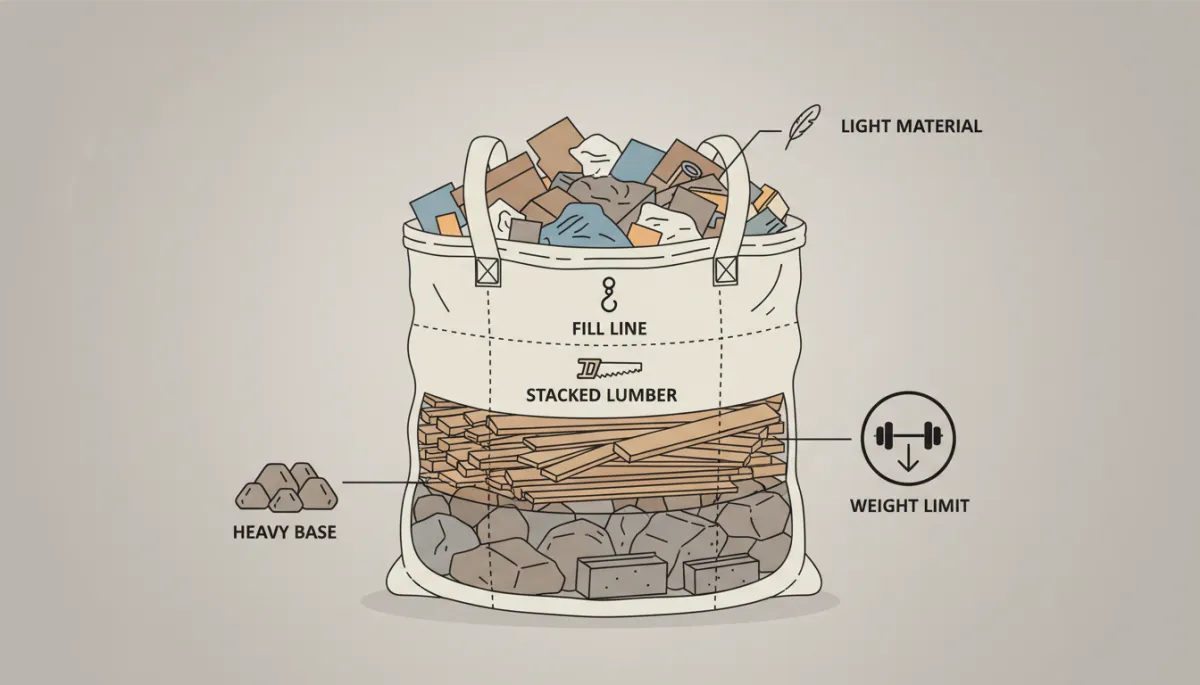
Layering heavy and light materials correctly keeps the load stable, safe, and ready for pickup.
6. Keep Prohibited and Hazardous Materials Out
Do not place hazardous materials—such as asbestos, certain chemicals, or fuel containers—into a dumpster bag. These items require special handling under state regulations. For guidance on hazardous components in demolition projects, consult resources such as RecyclingWorks MA’s construction and demolition materials guidance or contact a licensed abatement contractor.
How Junksterbag Streamlines Construction Debris Removal in Manchester-by-the-Sea
Junksterbag focuses on making construction debris removal simple, predictable, and compliant for both homeowners and contractors. By pairing durable dumpster bags with scheduled pickup, you get roll-off style convenience without needing a large metal container that may violate HOA rules or require complex placement on Manchester-by-the-Sea’s tighter lots.
Flexible placement: Dumpster bags fit easily in driveways, side yards, or small parking areas, ideal for the town’s narrow streets and compact properties.
On-your-schedule loading: Fill the bag at your own pace during a renovation, then schedule pickup when the project phase is complete.
Professional handling and routing: Junksterbag coordinates delivery to appropriate facilities so materials are managed with recycling and waste bans in mind.
To explore options beyond Manchester-by-the-Sea, you can review nearby service examples such as dumpster bag pickup in Stoughton, MA or dumpster bag pickup in Saugus, MA, which outline how Junksterbag supports a range of Massachusetts communities with similar regulatory environments.
When you are ready to schedule service locally, the Manchester-by-the-Sea dumpster bag pickup page provides up-to-date information on availability, pricing, and how to prepare your bag for a smooth collection.
Checklist: Preparing for a Smooth Dumpster Bag Pickup in Manchester-by-the-Sea
Confirm HOA or condo approval for bag placement and duration.
Choose a level, paved spot with clear vehicle access and no overhead obstacles.
Review what can and cannot go into the bag, especially hazardous or banned materials.
Load heavy, flat debris first, then stack lumber and drywall, with light material on top.
Keep debris below the fill line and within the weight limit.
Bag dusty or loose materials and secure the site to prevent windblown debris.
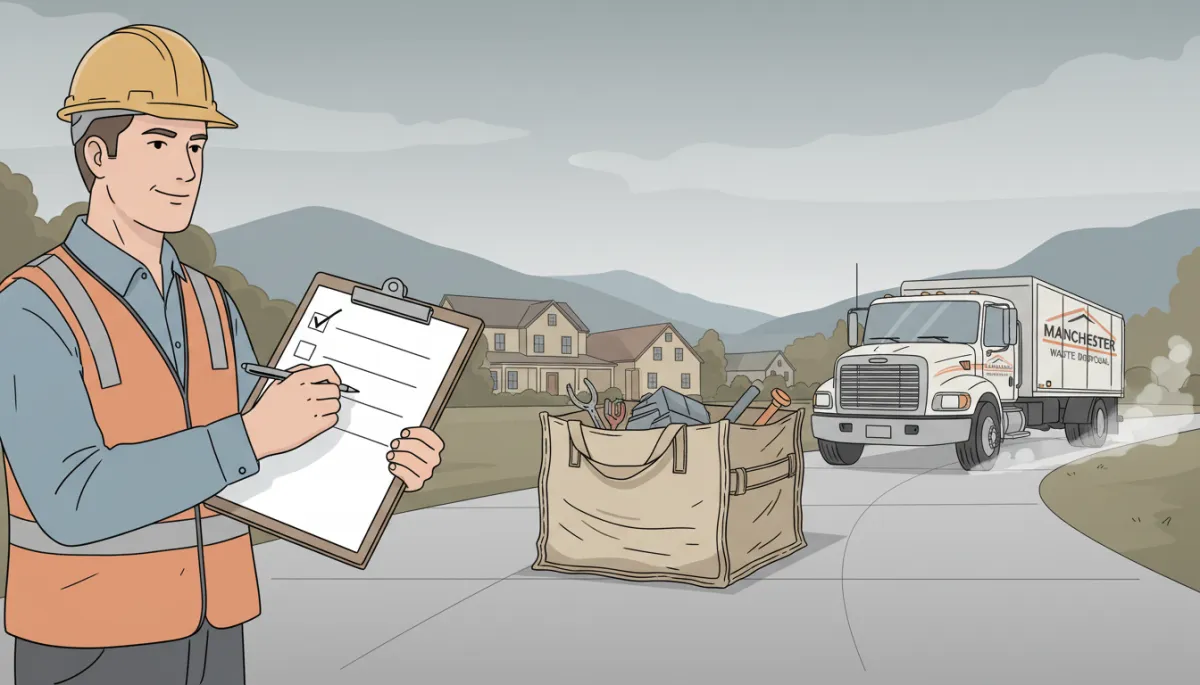
A simple pre-pickup checklist helps avoid delays and extra fees on construction projects.
FAQs: Construction Debris Removal and Dumpster Bags in Manchester-by-the-Sea, MA
1. Can I put construction debris in my regular Manchester-by-the-Sea trash?
Only very small amounts of construction waste are allowed in the town’s orange “Pay-As-You-Throw” bags, and no construction debris is accepted at the Transfer Station. For most renovation or building projects, you will need a private solution such as a dumpster bag and professional pickup to remain compliant and avoid rejected trash.
2. How full can I load a dumpster bag for construction debris removal in Manchester-by-the-Sea, MA?
Always respect the printed fill line and the manufacturer’s weight limit. Heavy materials such as concrete, brick, and roofing can add up quickly, so focus on even weight distribution and avoid mounding debris above the top edges. If you are unsure, consider using a second bag rather than risking an unsafe or rejected pickup.
3. Do I need a permit to place a dumpster bag in my driveway in Manchester-by-the-Sea?
In most cases, a dumpster bag placed on your private driveway does not require a separate town permit. However, if you live in a condo or HOA community, you may need written approval from your association. If the bag would sit partially on a public way or in a shared parking lot, consult the town or property manager before placement.
4. What types of construction debris can go into a Junksterbag dumpster bag?
Typical allowable materials include non-hazardous renovation waste such as lumber, drywall, tile, flooring, cabinetry, doors, windows (without hazardous glazing), and small amounts of masonry. Items that may contain hazardous materials—such as asbestos siding or certain older insulation—must be handled separately. Always review Junksterbag’s material guidelines or contact support with specific questions before loading.
5. How does proper loading help with recycling and Massachusetts waste bans?
When you keep similar materials together—such as stacking clean lumber in one section and metal in another—processing facilities can more easily separate and recycle them. This supports MassDEP’s waste bans, which require diversion of many construction materials from disposal, and helps your project meet best practices for sustainability in Massachusetts.
6. What if my Manchester-by-the-Sea project is near wetlands or the shoreline?
Projects near wetlands, streams, or the harbor may require filings with the local Conservation Commission. It is especially important to keep debris contained, prevent runoff, and avoid placing dumpster bags where stormwater could carry materials toward sensitive areas. When in doubt, consult town conservation resources before starting work and choose a placement location that minimizes environmental risk.
7. How far in advance should I schedule dumpster bag pickup in Manchester-by-the-Sea?
Lead times can vary by season. During busy renovation periods or in winter weather, scheduling earlier helps ensure you get your preferred pickup window. As a best practice, estimate when your bag will be full, then contact Junksterbag several days in advance through the Manchester-by-the-Sea pickup page to lock in a date and review any last-minute placement or loading questions.
8. Is a dumpster bag better than a traditional roll-off dumpster for small Manchester-by-the-Sea projects?
For many kitchen, bath, or small addition projects, a dumpster bag offers enough capacity with far more flexibility. It is easier to place on tight driveways, less visually intrusive for neighbors and HOAs, and typically does not require the same level of site coordination as a large metal roll-off. For very large or ongoing commercial jobs, a roll-off may still be appropriate, but for most residential renovations, a well-loaded dumpster bag is a practical, cost-effective solution.
Final Thoughts: Safe, Compliant Construction Debris Removal in Manchester-by-the-Sea, MA
Construction debris removal in Manchester-by-the-Sea, MA requires more than just a place to toss old materials. With strict town limits on curbside construction waste and statewide waste bans on many common building products, using a properly loaded dumpster bag and a reliable pickup service is essential for both compliance and convenience. By planning around local constraints—parking, HOAs, winter conditions, and environmental protections—and following best practices for loading, you protect your property, your budget, and the coastal environment that makes the town unique.
When you are ready to simplify your next renovation or construction project, explore Junksterbag’s resources, including the dedicated Manchester-by-the-Sea dumpster bag pickup page and related service areas such as Norwood and Weymouth. With the right preparation and a well-loaded dumpster bag, you can keep your job site clean, efficient, and fully aligned with local and state requirements.